We, the regional networks Alianza Regional por la Libre Expresión e Información, Civicus, IFEX-ALC and Voces del Sur, call on the international community to condemn outright a new legislative initiative that would criminalise Venezuelan civil society organisations and their legitimate activities. Both the organisations and their activities must receive protection under the right to freedom of association.
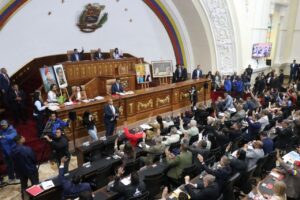
On 24 January 2023, the Venezuelan National Assembly approved, on first reading, a
proposed “Law for Inspection, Regulation, Operations and Financing of Non-Governmental and Related Organisations.” The presentation of the proposed legislation to parliament was followed by stigmatising discourse from government officials, characterizing civil society organisations that promote human rights or carry out social or humanitarian work as “enemies of the homeland.”
Venezuela is undergoing a structural crisis that has been negatively impacting the economic, civil, political and human rights of the country’s citizens for several years, with consequences at the regional level as well, due to the displacement of millions of people to neighbouring countries. This situation is being addressed by civil society organisations via social and humanitarian assistance. The proposed law could restrict the essential work of these organisations.
At the time of publication of this statement, the text of the bill has not yet been made public. It did, however, receive immediate approval after submission, without having been debated by the National Assembly. The bill’s submission also failed to comply with the process stipulated in the Constitution for the treatment of legislative initiatives.
Civil Society Organisations in Venezuela are already subject to a series of registration
requirements and must comply with financial commitments. However, compliance is actively bhindered by the State, through its complex and inaccessible records and registration systems.
The proposed law grants legislative and inspection powers to the Executive Branch to
supervise, scrutinise, audit, and sanction organisations and associated parties. These
powers will make the very existence of civil society organisations dependent on whichever government is in power, which infringes on their autonomy and independence.
In addition, the law, if approved, will require organisations to provide information regarding their constitution, statutes, activities, administration, where they are based, and where their resources are destined to go, along with precise details regarding their sources of financing.
This would be taking place within a context where this type of information is used to
persecute and criminalise those who criticise the government.
Transparency is an essential pillar for the work of civil society organisations, and forms part of best practices, but the compulsory aspects of this law must be framed by clear institutional guarantees that effectively respect and protect freedom of association.
We call on the international community to actively support all efforts to prevent this and other similar legislation from proliferating in the region, as they weaken an already ulnerable civic space. These types of initiatives feed into stigmatising narratives and promote further actions in the same vein, driven by powerful sectors with motives that are increasingly anti-democratic. If this bill gains final approval, the work of non-governmental organisations in Venezuela will come under threat, which would increase restrictions on the already narrow civic space in the country.
A healthy democracy requires the work of all sectors of civil society—individuals,
organisations, movements and collectives—to keep policies that seek to diminish their
foundations in check. The goal of such policies is to diminish legitimate mechanisms,
draining them of substance and converting them into instruments for preserving and
increasing power, sacrificing those whose only aim is to legitimately exercise their rights.
Comparte:
- Comparte en Facebook (Se abre en una ventana nueva) Facebook
- Compartir en X (Se abre en una ventana nueva) X
- Compartir en WhatsApp (Se abre en una ventana nueva) WhatsApp
- Compartir en Telegram (Se abre en una ventana nueva) Telegram
- Compartir en LinkedIn (Se abre en una ventana nueva) LinkedIn
- Enviar un enlace a un amigo por correo electrónico (Se abre en una ventana nueva) Correo electrónico
- Imprimir (Se abre en una ventana nueva) Imprimir